Self-Regulating Heating Cable Range for Industrial Pipe and Vessel Protection
Self regulating heating cable is the standard choice wherever an industrial pipe or vessel needs protection from freezing, a steady process temperature, or a controlled heat-up, without a control system watching every metre of pipe. Whether your specification calls it self regulating heating cable, heat trace cable or trace heating cable, this page is a working reference for specifiers and EPCs: how to work through the checks that set the right cable family, a straight comparison of our industrial self-regulating range against exposure temperature and power output, and what we need from you to turn a line list into a FEED-stage budget figure.
Example of Applications
These cables can be used for a wide variety of applications, including:
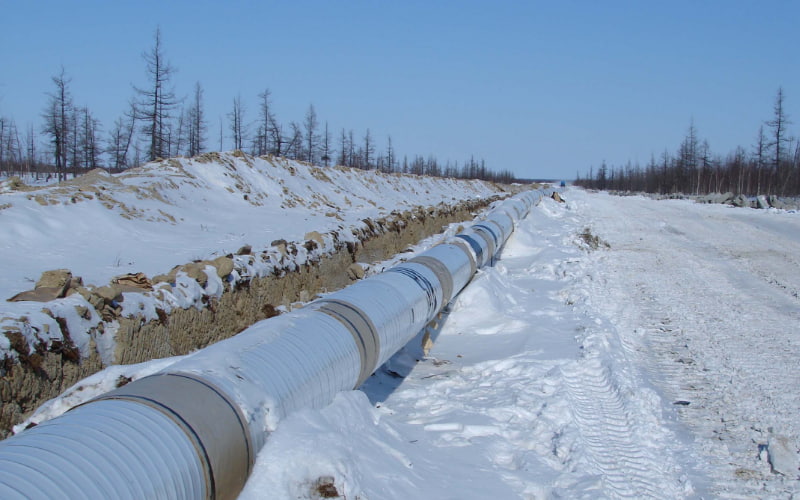
- Freeze protection of pipework & vessels
- Process temperature maintenance
- Heating of roads, ramps, walkways etc
- Roof & gutter heating
- Under floor heating
Benefits
- Automatically adjusts heat output in response to increasing or decreasing pipe temperature
- Inherently temperature safe
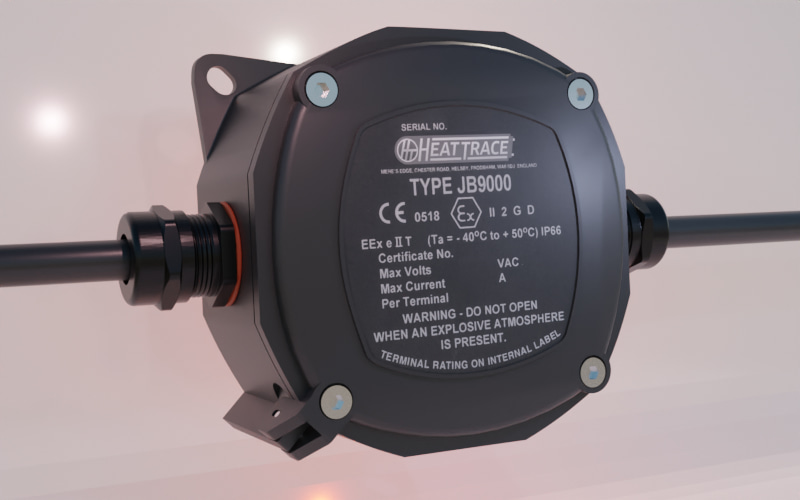
- Suitable for use in safe, hazardous and corrosive areas
- Available up to 1000 volts
How to Specify a Self-Regulating Heating Cable
Six checks decide which self regulating heating cable family fits your application. Work through them in this order and you'll land on the right rating without a round trip to the datasheets.
1. Process and thermal duty. Confirm the maintenance temperature, and the minimum and maximum process temperature. If the line is steam-cleaned or otherwise sees an exposure temperature above normal running conditions, that figure rules cable families in or out before anything else: our Freezstop Regular (FSR) tops out at 85°C exposure, while FailSafe Ultimo (FSU) handles up to 250°C. You'll also need the minimum start-up temperature, since that sets the cold power draw the circuit has to carry.
2. Ambient and environment. Indoor, outdoor or underground, plus minimum and maximum ambient temperature and wind speed where pipework is exposed. These figures drive the heat loss calculation. Atmosphere (normal, corrosive or marine) decides jacket and sheath material.
3. Hazardous area classification. Non-hazardous or hazardous; if hazardous, the zone (1, 2, 21 or 22), T-rating (T1 to T5) and gas group (IIA, IIB or IIC), the classification system used across ATEX and IECEx certified equipment. T-rating caps the cable's permitted surface temperature, so check it against the exposure temperature from step one.
4. Electrical supply. Voltage, commonly 220/230V or 380/400V at 50Hz, and maximum circuit breaker size, which sets how far a single circuit of a given cable can run.
5. Substrate and insulation. Pipe or vessel, wall material, insulation type, K-factor and thickness. These feed the wattage calculation directly.
6. Mechanical data. Diameter, length, wall thickness, and the number of valves, flanges and supports on a pipe run, or vessel type, dimensions, nozzles, manholes and handholes on a vessel. This is what turns a spec into an accurate circuit count.
Send us these six answers, ideally on our heat tracing design questionnaire below, and we can shortlist the right cable family in one pass rather than several rounds of datasheets.


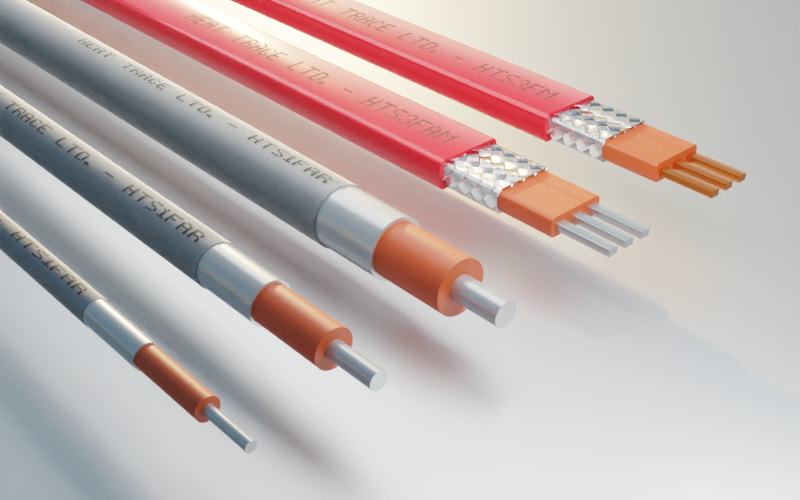
We can produce self-regulating heating cables within the following ranges:
- 12-1000 Volts
- Up to 250°C (482°F) withstand temperature
- Up to 130 W/m of output
We normally supply heating cables with a braid and outer jackets. Please see data sheets or contact us for more information.
View the Heat Trace Cable Range Max Exposure Temperature & Output Capability Graph:
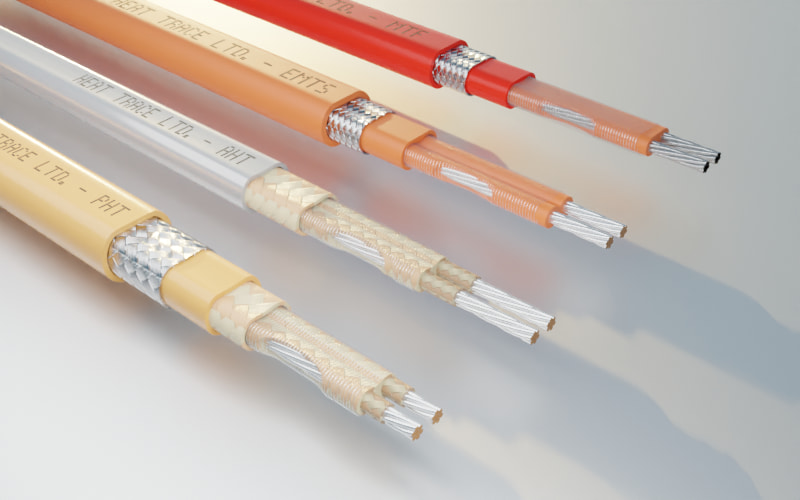
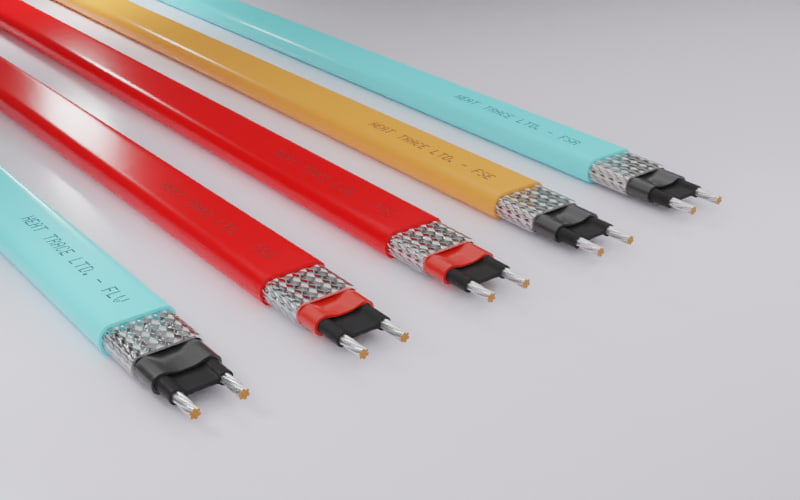
Our Self-Regulating Heating Cable Range
Our industrial self-regulating heating cable range covers five families, from general freeze protection through to 250°C process duty:
Family | Max exposure temp | Power output (W/m) | Typical duty |
|---|---|---|---|
85°C | 10 to 40 | General purpose freeze protection, light process maintenance | |
65°C | 11 to 17 (at 5°C start-up) | Compact cable for small diameter pipe and instrument tracing | |
100°C | 17 to 60 | Standard process temperature maintenance | |
225°C | 15 to 75 | Higher exposure tolerance, steam-out duty | |
250°C | 15 to 100 | Highest exposure tolerance in the range |
Hazardous area certification (zone, T-rating, gas group) and circuit length limits are confirmed on each product's datasheet, linked above, or in the full product brochure. Whichever heat trace cable family fits your exposure temperature and duty, every trace heating cable in this range is designed and manufactured in the UK, with full datasheet support for your technical file.
Request a Feed-Stage Estimate
Send us a completed heat tracing designquestionnaire, a line list or vessel list, and your general specification, and we'll come back with an overall power consumption figure and a budgetary price for FEED-stage decisions.
Tell us:
- Project stage: FEED, detailed design, construction or retrofit
- Application: pipe and vessel; process maintenance, winterising/anti-condensation, or heat-up
- Location and ambient range: indoor, outdoor or underground; minimum and maximum ambient temperature
- Hazardous area classification: non-hazardous, or zone, T-rating and gas group if hazardous
- Process and exposure temperature range
- Electrical supply voltage
We'll turn a completed form and line list around with a power and price estimate, so you've got the numbers you need before committing engineering time to a full design. Prefer to talk it through first? Contact our engineering team.